Mean Average Precision
supervision.metrics.mean_average_precision.MeanAveragePrecision

Bases: Metric
Mean Average Precision (mAP) is a metric used to evaluate object detection models. It is the average of the precision-recall curves at different IoU thresholds.
Examples:
>>> import numpy as np
>>> import supervision as sv
>>> from supervision.metrics import MeanAveragePrecision
>>> predictions = sv.Detections(
...     xyxy=np.array([[0, 0, 10, 10]]),
...     class_id=np.array([0]),
...     confidence=np.array([0.9])
... )
>>> targets = sv.Detections(
...     xyxy=np.array([[0, 0, 10, 10]]),
...     class_id=np.array([0])
... )
>>> map_metric = MeanAveragePrecision()
>>> map_result = map_metric.update(predictions, targets).compute()
>>> round(float(map_result.map50), 2)
1.0
>>> print(map_result)
Average Precision (AP) @[ IoU=0.50:0.95 | area=   all | maxDets=100 ] = 1.000
Average Precision (AP) @[ IoU=0.50      | area=   all | maxDets=100 ] = 1.000
Average Precision (AP) @[ IoU=0.75      | area=   all | maxDets=100 ] = 1.000
Average Precision (AP) @[ IoU=0.50:0.95 | area= small | maxDets=100 ] = 1.000
Average Precision (AP) @[ IoU=0.50:0.95 | area=medium | maxDets=100 ] = -1.000
Average Precision (AP) @[ IoU=0.50:0.95 | area= large | maxDets=100 ] = -1.000
Source code in src/supervision/metrics/mean_average_precision.py
1226 1227 1228 1229 1230 1231 1232 1233 1234 1235 1236 1237 1238 1239 1240 1241 1242 1243 1244 1245 1246 1247 1248 1249 1250 1251 1252 1253 1254 1255 1256 1257 1258 1259 1260 1261 1262 1263 1264 1265 1266 1267 1268 1269 1270 1271 1272 1273 1274 1275 1276 1277 1278 1279 1280 1281 1282 1283 1284 1285 1286 1287 1288 1289 1290 1291 1292 1293 1294 1295 1296 1297 1298 1299 1300 1301 1302 1303 1304 1305 1306 1307 1308 1309 1310 1311 1312 1313 1314 1315 1316 1317 1318 1319 1320 1321 1322 1323 1324 1325 1326 1327 1328 1329 1330 1331 1332 1333 1334 1335 1336 1337 1338 1339 1340 1341 1342 1343 1344 1345 1346 1347 1348 1349 1350 1351 1352 1353 1354 1355 1356 1357 1358 1359 1360 1361 1362 1363 1364 1365 1366 1367 1368 1369 1370 1371 1372 1373 1374 1375 1376 1377 1378 1379 1380 1381 1382 1383 1384 1385 1386 1387 1388 1389 1390 1391 1392 1393 1394 1395 1396 1397 1398 1399 1400 1401 1402 1403 1404 1405 1406 1407 1408 1409 1410 1411 1412 1413 1414 1415 1416 1417 1418 1419 1420 1421 1422 1423 1424 1425 1426 1427 1428 1429 1430 1431 1432 1433 1434 1435 1436 1437 1438 1439 1440 1441 1442 1443 1444 1445 1446 1447 1448 1449 1450 1451 1452 1453 1454 1455 1456 1457 1458 1459 1460 1461 1462 1463 1464 1465 1466 1467 1468 1469 1470 1471 1472 1473 1474 1475 1476 1477 1478 1479 1480 1481 1482 1483 1484 1485 1486 1487 1488 1489 1490 1491 1492 1493 1494 1495 1496 1497 1498 1499 1500 1501 1502 1503 1504 1505 1506 1507 1508 1509 1510 1511 1512 1513 1514 1515 1516 1517 1518 1519 1520 | |
Functions
__init__(metric_target: MetricTarget = MetricTarget.BOXES, class_agnostic: bool = False, class_mapping: dict[int, int] | None = None, image_indices: list[int] | None = None)

Initialize the Mean Average Precision metric.
Parameters:
| Name | Type | Description | Default |
|---|---|---|---|
|
MetricTarget
|
The type of detection data to use. |
BOXES
|
|
bool
|
Whether to treat all data as a single class. |
False
|
|
dict[int, int] | None
|
A dictionary to map class IDs to new IDs. |
None
|
|
list[int] | None
|
The indices of the images to use. |
None
|
Source code in src/supervision/metrics/mean_average_precision.py
compute() -> MeanAveragePrecisionResult

Calculate Mean Average Precision based on predicted and ground-truth detections at different thresholds using the COCO evaluation metrics. Source: https://github.com/rafaelpadilla/review_object_detection_metrics
Returns:
| Type | Description |
|---|---|
MeanAveragePrecisionResult
|
The Mean Average Precision result. |
Source code in src/supervision/metrics/mean_average_precision.py
1450 1451 1452 1453 1454 1455 1456 1457 1458 1459 1460 1461 1462 1463 1464 1465 1466 1467 1468 1469 1470 1471 1472 1473 1474 1475 1476 1477 1478 1479 1480 1481 1482 1483 1484 1485 1486 1487 1488 1489 1490 1491 1492 1493 1494 1495 1496 1497 1498 1499 1500 1501 1502 1503 1504 1505 1506 1507 1508 1509 1510 1511 1512 1513 1514 1515 1516 1517 1518 1519 1520 | |
reset() -> None

Reset the metric to its initial state, clearing all stored data.
update(predictions: Detections | list[Detections], targets: Detections | list[Detections]) -> MeanAveragePrecision

Add new predictions and targets to the metric, but do not compute the result.
Parameters:
| Name | Type | Description | Default |
|---|---|---|---|
|
Detections | list[Detections]
|
The predicted detections. |
required |
|
Detections | list[Detections]
|
The ground-truth detections. |
required |
Returns:
| Type | Description |
|---|---|
MeanAveragePrecision
|
The updated metric instance. |
Source code in src/supervision/metrics/mean_average_precision.py
supervision.metrics.mean_average_precision.MeanAveragePrecisionResult
dataclass

The result of the Mean Average Precision calculation.
Defaults to 0 when no detections or targets are present.
Attributes:
| Name | Type | Description |
|---|---|---|
metric_target |
MetricTarget
|
the type of data used for the metric - boxes, masks or oriented bounding boxes. |
is_class_agnostic |
bool
|
When computing class-agnostic results, class ID
is set to |
mAP_scores |
NDArray[float64]
|
the mAP scores at each IoU threshold.
Shape: |
ap_per_class |
NDArray[float64]
|
the average precision scores per
class and IoU threshold. Shape: |
iou_thresholds |
NDArray[float64]
|
the IoU thresholds used in the calculations. |
matched_classes |
NDArray[int32]
|
the class IDs of all matched classes.
Corresponds to the rows of |
small_objects |
MeanAveragePrecisionResult | None
|
the mAP results for small objects (area < 32²). |
medium_objects |
MeanAveragePrecisionResult | None
|
the mAP results for medium objects (32² ≤ area < 96²). |
large_objects |
MeanAveragePrecisionResult | None
|
the mAP results for large objects (area ≥ 96²). |
Source code in src/supervision/metrics/mean_average_precision.py
29 30 31 32 33 34 35 36 37 38 39 40 41 42 43 44 45 46 47 48 49 50 51 52 53 54 55 56 57 58 59 60 61 62 63 64 65 66 67 68 69 70 71 72 73 74 75 76 77 78 79 80 81 82 83 84 85 86 87 88 89 90 91 92 93 94 95 96 97 98 99 100 101 102 103 104 105 106 107 108 109 110 111 112 113 114 115 116 117 118 119 120 121 122 123 124 125 126 127 128 129 130 131 132 133 134 135 136 137 138 139 140 141 142 143 144 145 146 147 148 149 150 151 152 153 154 155 156 157 158 159 160 161 162 163 164 165 166 167 168 169 170 171 172 173 174 175 176 177 178 179 180 181 182 183 184 185 186 187 188 189 190 191 192 193 194 195 196 197 198 199 200 201 202 203 204 205 206 207 208 209 210 211 212 213 214 215 216 217 218 219 220 221 222 223 224 225 226 227 228 229 230 231 232 233 234 235 236 237 238 239 240 241 242 243 244 245 246 | |
Attributes
map50: float
property

the mAP score at IoU threshold of 0.5.
map50_95: float
property

the mAP score at IoU thresholds from 0.5 to 0.95.
map75: float
property

the mAP score at IoU threshold of 0.75.
Functions
__str__() -> str

Formats the evaluation output metrics to match the structure used by pycocotools
Example
>>> import numpy as np
>>> import supervision as sv
>>> from supervision.metrics import MeanAveragePrecision
>>> predictions = sv.Detections(
...     xyxy=np.array([[0, 0, 10, 10]]),
...     class_id=np.array([0]),
...     confidence=np.array([0.9])
... )
>>> targets = sv.Detections(
...     xyxy=np.array([[0, 0, 10, 10]]),
...     class_id=np.array([0])
... )
>>> map_metric = MeanAveragePrecision()
>>> map_result = map_metric.update(predictions, targets).compute()
>>> print(map_result)  # doctest: +ELLIPSIS
Average Precision (AP) @[ IoU=0.50:0.95 | area=   all | maxDets=100 ] = ...
Average Precision (AP) @[ IoU=0.50      | area=   all | maxDets=100 ] = ...
Average Precision (AP) @[ IoU=0.75      | area=   all | maxDets=100 ] = ...
Average Precision (AP) @[ IoU=0.50:0.95 | area= small | maxDets=100 ] = ...
Average Precision (AP) @[ IoU=0.50:0.95 | area=medium | maxDets=100 ] = ...
Average Precision (AP) @[ IoU=0.50:0.95 | area= large | maxDets=100 ] = ...
Source code in src/supervision/metrics/mean_average_precision.py
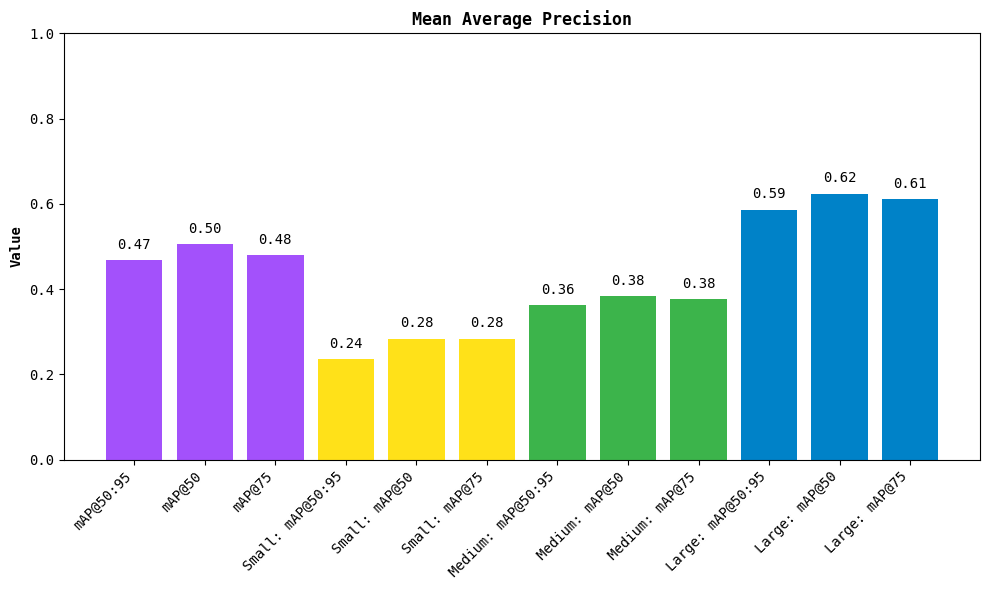
plot() -> None

Plot the mAP results.
Source code in src/supervision/metrics/mean_average_precision.py
to_pandas() -> pd.DataFrame

Convert the result to a pandas DataFrame.
Returns:
| Type | Description |
|---|---|
DataFrame
|
The result as a DataFrame. |
Source code in src/supervision/metrics/mean_average_precision.py
supervision.dataset.formats.coco.get_coco_class_index_mapping(annotations_path: str) -> dict[int, int]

Generates a mapping from sequential class indices to original COCO class ids.
This function is essential when working with models that expect class ids to be zero-indexed and sequential (0 to 79), as opposed to the original COCO dataset where category ids are non-contiguous ranging from 1 to 90 but skipping some ids.
Use Cases
- Evaluating models trained with COCO-style annotations where class ids are sequential ranging from 0 to 79.
- Ensuring consistent class indexing across training, inference and evaluation, when using different tools or datasets with COCO format.
- Reproducing results from models that assume sequential class ids (0 to 79).
How it Works
- Reads the COCO annotation file in its original format (
annotations_path). - Extracts and sorts all class names by their original COCO id (1 to 90).
- Builds a mapping from COCO class ids (not sequential with skipped ids) to new class ids (sequential ranging from 0 to 79).
- Returns a dictionary mapping:
{new_class_id: original_COCO_class_id}.
Parameters:
| Name | Type | Description | Default |
|---|---|---|---|
|
str
|
Path to COCO JSON annotations file |
required |
Returns:
| Type | Description |
|---|---|
dict[int, int]
|
A mapping from new class id (sequential ranging from 0 to 79) |
dict[int, int]
|
to original COCO class id (1 to 90 with skipped ids). |