Skip to content

Masks Utils

supervision.detection.utils.masks.move_masks(masks, offset, resolution_wh)

Offset the masks in an array by the specified (x, y) amount.

Parameters:

Name Type Description Default

masks

NDArray[bool_]

A 3D array of binary masks corresponding to the predictions. Shape: (N, H, W), where N is the number of predictions, and H, W are the dimensions of each mask.

required

offset

NDArray[int32]

An array of shape (2,) containing int values [dx, dy]. Supports both positive and negative values for bidirectional movement.

required

resolution_wh

Tuple[int, int]

The width and height of the desired mask resolution.

required

Returns:

Type Description
NDArray[bool_]

(npt.NDArray[np.bool_]) repositioned masks, optionally padded to the specified shape.

Examples:

import numpy as np
import supervision as sv

mask = np.array([[[False, False, False, False],
                 [False, True,  True,  False],
                 [False, True,  True,  False],
                 [False, False, False, False]]], dtype=bool)

offset = np.array([1, 1])
sv.move_masks(mask, offset, resolution_wh=(4, 4))
# array([[[False, False, False, False],
#         [False, False, False, False],
#         [False, False,  True,  True],
#         [False, False,  True,  True]]], dtype=bool)

offset = np.array([-2, 2])
sv.move_masks(mask, offset, resolution_wh=(4, 4))
# array([[[False, False, False, False],
#         [False, False, False, False],
#         [True,  False, False, False]]], dtype=bool)
Source code in supervision/detection/utils/masks.py
def move_masks(
    masks: npt.NDArray[np.bool_],
    offset: npt.NDArray[np.int32],
    resolution_wh: tuple[int, int],
) -> npt.NDArray[np.bool_]:
    """
    Offset the masks in an array by the specified (x, y) amount.

    Args:
        masks (npt.NDArray[np.bool_]): A 3D array of binary masks corresponding to the
            predictions. Shape: `(N, H, W)`, where N is the number of predictions, and
            H, W are the dimensions of each mask.
        offset (npt.NDArray[np.int32]): An array of shape `(2,)` containing int values
            `[dx, dy]`. Supports both positive and negative values for bidirectional
            movement.
        resolution_wh (Tuple[int, int]): The width and height of the desired mask
            resolution.

    Returns:
        (npt.NDArray[np.bool_]) repositioned masks, optionally padded to the specified
            shape.

    Examples:
        ```python
        import numpy as np
        import supervision as sv

        mask = np.array([[[False, False, False, False],
                         [False, True,  True,  False],
                         [False, True,  True,  False],
                         [False, False, False, False]]], dtype=bool)

        offset = np.array([1, 1])
        sv.move_masks(mask, offset, resolution_wh=(4, 4))
        # array([[[False, False, False, False],
        #         [False, False, False, False],
        #         [False, False,  True,  True],
        #         [False, False,  True,  True]]], dtype=bool)

        offset = np.array([-2, 2])
        sv.move_masks(mask, offset, resolution_wh=(4, 4))
        # array([[[False, False, False, False],
        #         [False, False, False, False],
        #         [False, False, False, False],
        #         [True,  False, False, False]]], dtype=bool)
        ```
    """
    mask_array = np.full((masks.shape[0], resolution_wh[1], resolution_wh[0]), False)

    if offset[0] < 0:
        source_x_start = -offset[0]
        source_x_end = min(masks.shape[2], resolution_wh[0] - offset[0])
        destination_x_start = 0
        destination_x_end = min(resolution_wh[0], masks.shape[2] + offset[0])
    else:
        source_x_start = 0
        source_x_end = min(masks.shape[2], resolution_wh[0] - offset[0])
        destination_x_start = offset[0]
        destination_x_end = offset[0] + source_x_end - source_x_start

    if offset[1] < 0:
        source_y_start = -offset[1]
        source_y_end = min(masks.shape[1], resolution_wh[1] - offset[1])
        destination_y_start = 0
        destination_y_end = min(resolution_wh[1], masks.shape[1] + offset[1])
    else:
        source_y_start = 0
        source_y_end = min(masks.shape[1], resolution_wh[1] - offset[1])
        destination_y_start = offset[1]
        destination_y_end = offset[1] + source_y_end - source_y_start

    if source_x_end > source_x_start and source_y_end > source_y_start:
        mask_array[
            :,
            destination_y_start:destination_y_end,
            destination_x_start:destination_x_end,
        ] = masks[:, source_y_start:source_y_end, source_x_start:source_x_end]

    return mask_array

supervision.detection.utils.masks.contains_holes(mask)

Checks if the binary mask contains holes (background pixels fully enclosed by foreground pixels).

Parameters:

Name Type Description Default

mask

NDArray[bool_]

2D binary mask where True indicates foreground object and False indicates background.

required

Returns:

Type Description
bool

True if holes are detected, False otherwise.

Examples:

import numpy as np
import supervision as sv

mask = np.array([
    [0, 0, 0, 0, 0],
    [0, 1, 1, 1, 0],
    [0, 1, 0, 1, 0],
    [0, 1, 1, 1, 0],
    [0, 0, 0, 0, 0]
]).astype(bool)

sv.contains_holes(mask=mask)
# True

mask = np.array([
    [0, 0, 0, 0, 0],
    [0, 1, 1, 1, 0],
    [0, 1, 1, 1, 0],
    [0, 1, 1, 1, 0],
    [0, 0, 0, 0, 0]
]).astype(bool)

sv.contains_holes(mask=mask)
# False
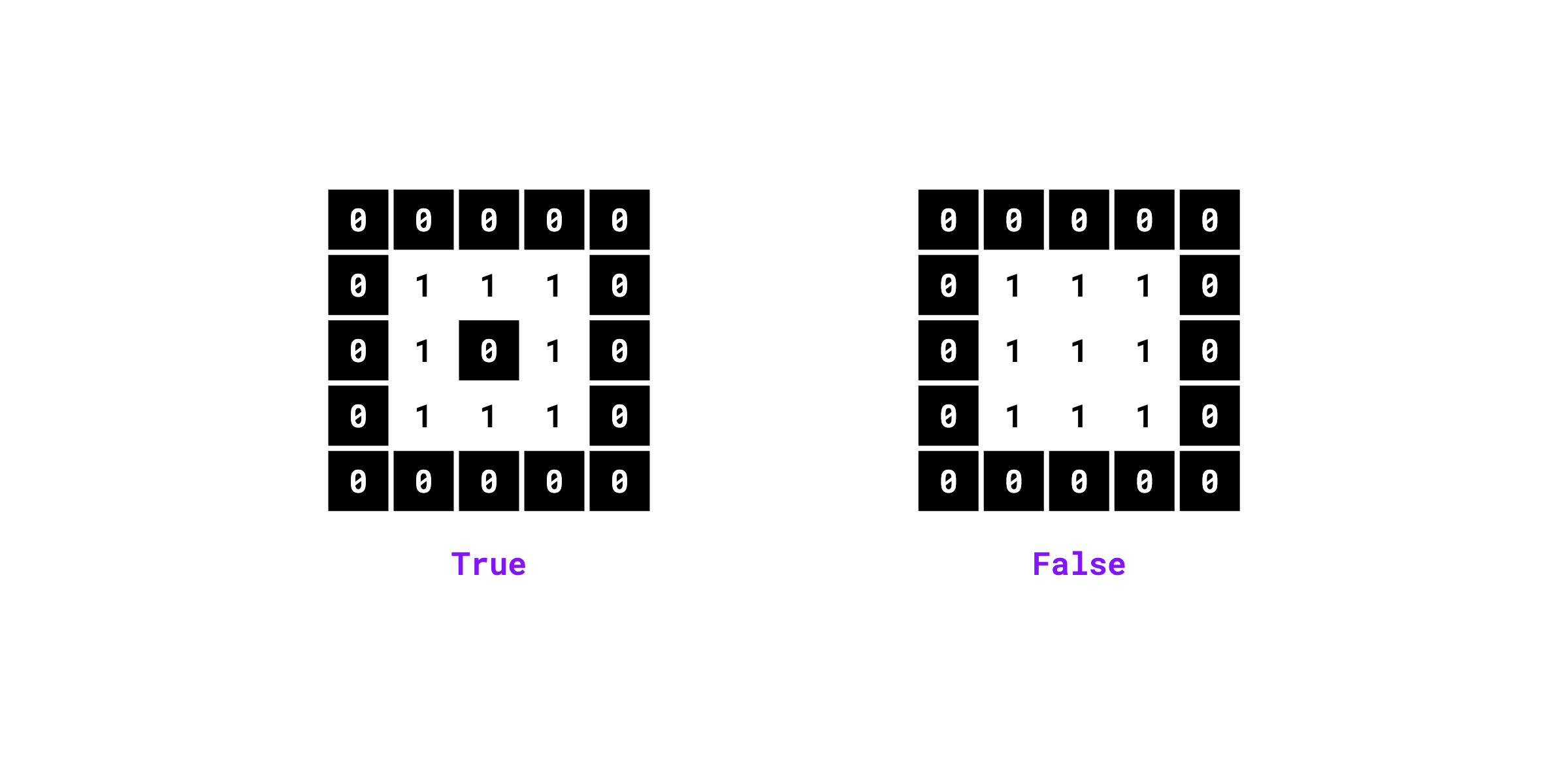
contains_holes

Source code in supervision/detection/utils/masks.py
def contains_holes(mask: npt.NDArray[np.bool_]) -> bool:
    """
    Checks if the binary mask contains holes (background pixels fully enclosed by
    foreground pixels).

    Args:
        mask (npt.NDArray[np.bool_]): 2D binary mask where `True` indicates foreground
            object and `False` indicates background.

    Returns:
        True if holes are detected, False otherwise.

    Examples:
        ```python
        import numpy as np
        import supervision as sv

        mask = np.array([
            [0, 0, 0, 0, 0],
            [0, 1, 1, 1, 0],
            [0, 1, 0, 1, 0],
            [0, 1, 1, 1, 0],
            [0, 0, 0, 0, 0]
        ]).astype(bool)

        sv.contains_holes(mask=mask)
        # True

        mask = np.array([
            [0, 0, 0, 0, 0],
            [0, 1, 1, 1, 0],
            [0, 1, 1, 1, 0],
            [0, 1, 1, 1, 0],
            [0, 0, 0, 0, 0]
        ]).astype(bool)

        sv.contains_holes(mask=mask)
        # False
        ```

    ![contains_holes](https://media.roboflow.com/supervision-docs/contains-holes.png){ align=center width="800" }
    """  # noqa E501 // docs
    mask_uint8 = mask.astype(np.uint8)
    _, hierarchy = cv2.findContours(mask_uint8, cv2.RETR_CCOMP, cv2.CHAIN_APPROX_SIMPLE)

    if hierarchy is not None:
        parent_contour_index = 3
        for h in hierarchy[0]:
            if h[parent_contour_index] != -1:
                return True
    return False

supervision.detection.utils.masks.contains_multiple_segments(mask, connectivity=4)

Checks if the binary mask contains multiple unconnected foreground segments.

Parameters:

Name Type Description Default

mask

NDArray[bool_]

2D binary mask where True indicates foreground object and False indicates background.

required

connectivity (int)

Default: 4 is 4-way connectivity, which means that foreground pixels are the part of the same segment/component if their edges touch. Alternatively: 8 for 8-way connectivity, when foreground pixels are connected by their edges or corners touch.

required

Returns:

Type Description
bool

True when the mask contains multiple not connected components, False otherwise.

Raises:

Type Description
ValueError

If connectivity(int) parameter value is not 4 or 8.

Examples:

import numpy as np
import supervision as sv

mask = np.array([
    [0, 0, 0, 0, 0, 0],
    [0, 1, 1, 0, 1, 1],
    [0, 1, 1, 0, 1, 1],
    [0, 0, 0, 0, 0, 0],
    [0, 1, 1, 1, 0, 0],
    [0, 1, 1, 1, 0, 0]
]).astype(bool)

sv.contains_multiple_segments(mask=mask, connectivity=4)
# True

mask = np.array([
    [0, 0, 0, 0, 0, 0],
    [0, 1, 1, 1, 1, 1],
    [0, 1, 1, 1, 1, 1],
    [0, 1, 1, 1, 1, 1],
    [0, 1, 1, 1, 1, 1],
    [0, 0, 0, 0, 0, 0]
]).astype(bool)

sv.contains_multiple_segments(mask=mask, connectivity=4)
# False
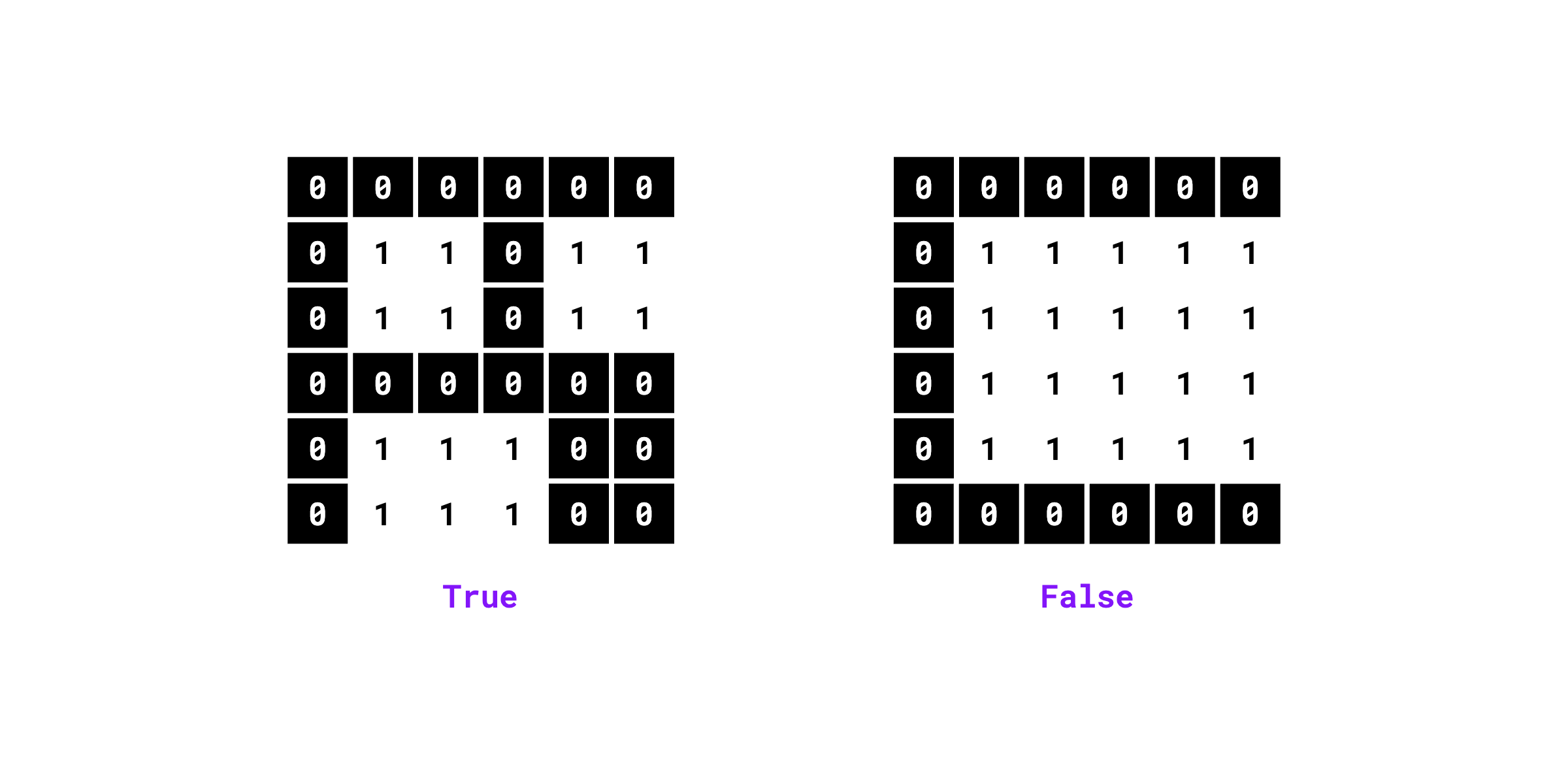
contains_multiple_segments

Source code in supervision/detection/utils/masks.py
def contains_multiple_segments(
    mask: npt.NDArray[np.bool_], connectivity: int = 4
) -> bool:
    """
    Checks if the binary mask contains multiple unconnected foreground segments.

    Args:
        mask (npt.NDArray[np.bool_]): 2D binary mask where `True` indicates foreground
            object and `False` indicates background.
        connectivity (int) : Default: 4 is 4-way connectivity, which means that
            foreground pixels are the part of the same segment/component
            if their edges touch.
            Alternatively: 8 for 8-way connectivity, when foreground pixels are
            connected by their edges or corners touch.

    Returns:
        True when the mask contains multiple not connected components, False otherwise.

    Raises:
        ValueError: If connectivity(int) parameter value is not 4 or 8.

    Examples:
        ```python
        import numpy as np
        import supervision as sv

        mask = np.array([
            [0, 0, 0, 0, 0, 0],
            [0, 1, 1, 0, 1, 1],
            [0, 1, 1, 0, 1, 1],
            [0, 0, 0, 0, 0, 0],
            [0, 1, 1, 1, 0, 0],
            [0, 1, 1, 1, 0, 0]
        ]).astype(bool)

        sv.contains_multiple_segments(mask=mask, connectivity=4)
        # True

        mask = np.array([
            [0, 0, 0, 0, 0, 0],
            [0, 1, 1, 1, 1, 1],
            [0, 1, 1, 1, 1, 1],
            [0, 1, 1, 1, 1, 1],
            [0, 1, 1, 1, 1, 1],
            [0, 0, 0, 0, 0, 0]
        ]).astype(bool)

        sv.contains_multiple_segments(mask=mask, connectivity=4)
        # False
        ```

    ![contains_multiple_segments](https://media.roboflow.com/supervision-docs/contains-multiple-segments.png){ align=center width="800" }
    """  # noqa E501 // docs
    if connectivity != 4 and connectivity != 8:
        raise ValueError(
            "Incorrect connectivity value. Possible connectivity values: 4 or 8."
        )
    mask_uint8 = mask.astype(np.uint8)
    labels = np.zeros_like(mask_uint8, dtype=np.int32)
    number_of_labels, _ = cv2.connectedComponents(
        mask_uint8, labels, connectivity=connectivity
    )
    return number_of_labels > 2

supervision.detection.utils.masks.filter_segments_by_distance(mask, absolute_distance=100.0, relative_distance=None, connectivity=8, mode='edge')

Keep the largest connected component and any other components within a distance threshold.

Distance can be absolute in pixels or relative to the image diagonal.

Parameters:

Name Type Description Default

mask

NDArray[bool_]

Boolean mask HxW.

required

absolute_distance

float | None

Max allowed distance in pixels to the main component. Ignored if relative_distance is provided.

100.0

relative_distance

float | None

Fraction of the diagonal. If set, threshold = fraction * sqrt(H^2 + W^2).

None

connectivity

int

Defines which neighboring pixels are considered connected. - 4-connectedness: Only orthogonal neighbors.

[ ][X][ ]
[X][O][X]
[ ][X][ ]
- 8-connectedness: Includes diagonal neighbors.
[X][X][X]
[X][O][X]
[X][X][X]
Default is 8.

8

mode

Literal['edge', 'centroid']

Defines how distance between components is measured. - "edge": Uses distance between nearest edges (via distance transform). - "centroid": Uses distance between component centroids.

'edge'

Returns:

Type Description
NDArray[bool_]

Boolean mask after filtering.

Examples:

import numpy as np
import supervision as sv

mask = np.array([
    [0, 0, 0, 0, 0, 0, 0, 0, 0, 0, 0, 0],
    [0, 1, 1, 1, 0, 0, 0, 0, 0, 0, 0, 0],
    [0, 1, 1, 1, 0, 0, 0, 0, 0, 0, 0, 0],
    [0, 1, 1, 1, 0, 0, 1, 1, 0, 0, 0, 0],
    [0, 0, 0, 0, 0, 0, 1, 1, 0, 0, 0, 0],
    [0, 0, 0, 0, 0, 0, 0, 0, 0, 0, 0, 0],
    [0, 0, 0, 0, 0, 0, 0, 0, 0, 0, 0, 0],
    [0, 0, 0, 0, 0, 0, 0, 0, 0, 0, 0, 0],
    [0, 0, 0, 0, 0, 0, 0, 0, 0, 1, 1, 0],
    [0, 0, 0, 0, 0, 0, 0, 0, 0, 1, 1, 0],
    [0, 0, 0, 0, 0, 0, 0, 0, 0, 0, 0, 0],
    [0, 0, 0, 0, 0, 0, 0, 0, 0, 0, 0, 0],
], dtype=bool)

sv.filter_segments_by_distance(
    mask,
    absolute_distance=2,
    mode="edge",
    connectivity=8
).astype(int)

# np.array([
#     [0, 0, 0, 0, 0, 0, 0, 0, 0, 0, 0, 0],
#     [0, 1, 1, 1, 0, 0, 0, 0, 0, 0, 0, 0],
#     [0, 1, 1, 1, 0, 0, 0, 0, 0, 0, 0, 0],
#     [0, 1, 1, 1, 0, 0, 1, 1, 0, 0, 0, 0],
#     [0, 0, 0, 0, 0, 0, 1, 1, 0, 0, 0, 0],
#     [0, 0, 0, 0, 0, 0, 0, 0, 0, 0, 0, 0],
#     [0, 0, 0, 0, 0, 0, 0, 0, 0, 0, 0, 0],
#     [0, 0, 0, 0, 0, 0, 0, 0, 0, 0, 0, 0],
#     [0, 0, 0, 0, 0, 0, 0, 0, 0, 0, 0, 0],
#     [0, 0, 0, 0, 0, 0, 0, 0, 0, 0, 0, 0],
#     [0, 0, 0, 0, 0, 0, 0, 0, 0, 0, 0, 0],
#     [0, 0, 0, 0, 0, 0, 0, 0, 0, 0, 0, 0],
# ], dtype=bool)

# The nearby 2×2 block at columns 6–7 is kept because its edge distance
# is within 2 pixels. The distant block at columns 9-10 is removed.
Source code in supervision/detection/utils/masks.py
def filter_segments_by_distance(
    mask: npt.NDArray[np.bool_],
    absolute_distance: float | None = 100.0,
    relative_distance: float | None = None,
    connectivity: int = 8,
    mode: Literal["edge", "centroid"] = "edge",
) -> npt.NDArray[np.bool_]:
    """
    Keep the largest connected component and any other components within a distance
    threshold.

    Distance can be absolute in pixels or relative to the image diagonal.

    Args:
        mask: Boolean mask HxW.
        absolute_distance: Max allowed distance in pixels to the main component.
            Ignored if `relative_distance` is provided.
        relative_distance: Fraction of the diagonal. If set, threshold = fraction * sqrt(H^2 + W^2).
        connectivity: Defines which neighboring pixels are considered connected.
            - 4-connectedness: Only orthogonal neighbors.
              ```
              [ ][X][ ]
              [X][O][X]
              [ ][X][ ]
              ```
            - 8-connectedness: Includes diagonal neighbors.
              ```
              [X][X][X]
              [X][O][X]
              [X][X][X]
              ```
            Default is 8.
        mode: Defines how distance between components is measured.
            - "edge": Uses distance between nearest edges (via distance transform).
            - "centroid": Uses distance between component centroids.

    Returns:
        Boolean mask after filtering.

    Examples:
        ```python
        import numpy as np
        import supervision as sv

        mask = np.array([
            [0, 0, 0, 0, 0, 0, 0, 0, 0, 0, 0, 0],
            [0, 1, 1, 1, 0, 0, 0, 0, 0, 0, 0, 0],
            [0, 1, 1, 1, 0, 0, 0, 0, 0, 0, 0, 0],
            [0, 1, 1, 1, 0, 0, 1, 1, 0, 0, 0, 0],
            [0, 0, 0, 0, 0, 0, 1, 1, 0, 0, 0, 0],
            [0, 0, 0, 0, 0, 0, 0, 0, 0, 0, 0, 0],
            [0, 0, 0, 0, 0, 0, 0, 0, 0, 0, 0, 0],
            [0, 0, 0, 0, 0, 0, 0, 0, 0, 0, 0, 0],
            [0, 0, 0, 0, 0, 0, 0, 0, 0, 1, 1, 0],
            [0, 0, 0, 0, 0, 0, 0, 0, 0, 1, 1, 0],
            [0, 0, 0, 0, 0, 0, 0, 0, 0, 0, 0, 0],
            [0, 0, 0, 0, 0, 0, 0, 0, 0, 0, 0, 0],
        ], dtype=bool)

        sv.filter_segments_by_distance(
            mask,
            absolute_distance=2,
            mode="edge",
            connectivity=8
        ).astype(int)

        # np.array([
        #     [0, 0, 0, 0, 0, 0, 0, 0, 0, 0, 0, 0],
        #     [0, 1, 1, 1, 0, 0, 0, 0, 0, 0, 0, 0],
        #     [0, 1, 1, 1, 0, 0, 0, 0, 0, 0, 0, 0],
        #     [0, 1, 1, 1, 0, 0, 1, 1, 0, 0, 0, 0],
        #     [0, 0, 0, 0, 0, 0, 1, 1, 0, 0, 0, 0],
        #     [0, 0, 0, 0, 0, 0, 0, 0, 0, 0, 0, 0],
        #     [0, 0, 0, 0, 0, 0, 0, 0, 0, 0, 0, 0],
        #     [0, 0, 0, 0, 0, 0, 0, 0, 0, 0, 0, 0],
        #     [0, 0, 0, 0, 0, 0, 0, 0, 0, 0, 0, 0],
        #     [0, 0, 0, 0, 0, 0, 0, 0, 0, 0, 0, 0],
        #     [0, 0, 0, 0, 0, 0, 0, 0, 0, 0, 0, 0],
        #     [0, 0, 0, 0, 0, 0, 0, 0, 0, 0, 0, 0],
        # ], dtype=bool)

        # The nearby 2×2 block at columns 6–7 is kept because its edge distance
        # is within 2 pixels. The distant block at columns 9-10 is removed.
        ```
    """  # noqa E501 // docs
    if mask.dtype != bool:
        raise TypeError("mask must be boolean")

    height, width = mask.shape
    if not np.any(mask):
        return mask.copy()

    image = mask.astype(np.uint8)
    num_labels, labels, stats, centroids = cv2.connectedComponentsWithStats(
        image, connectivity=connectivity
    )

    if num_labels <= 1:
        return mask.copy()

    areas = stats[1:, cv2.CC_STAT_AREA]
    main_label = 1 + int(np.argmax(areas))

    if relative_distance is not None:
        diagonal = float(np.hypot(height, width))
        threshold = float(relative_distance) * diagonal
    else:
        threshold = float(absolute_distance)

    keep_labels = np.zeros(num_labels, dtype=bool)
    keep_labels[main_label] = True

    if mode == "centroid":
        differences = centroids[1:] - centroids[main_label]
        distances = np.sqrt(np.sum(differences**2, axis=1))
        nearby = 1 + np.where(distances <= threshold)[0]
        keep_labels[nearby] = True
    elif mode == "edge":
        main_mask = (labels == main_label).astype(np.uint8)
        inverse = 1 - main_mask
        distance_transform = cv2.distanceTransform(inverse, cv2.DIST_L2, 3)
        for label in range(1, num_labels):
            if label == main_label:
                continue
            component = labels == label
            if not np.any(component):
                continue
            min_distance = float(distance_transform[component].min())
            if min_distance <= threshold:
                keep_labels[label] = True
    else:
        raise ValueError("mode must be 'edge' or 'centroid'")

    return keep_labels[labels]

Comments